
Measuring your Pet
You may not be aware that the airlines calculate their freight charges based on the size of the travelling kennel that is used; therefore it is imperative that you measure your pet correctly, as even a 5cm discrepancy can potentially result in a difference of hundreds of dollars in freight charges.
It is important we use the right sized container for your animal. Airlines use the following indications to ensure the animal has enough space to turn about normally while standing, to stand and sit erect, and to lie in a natural position.
How to Measure your Pet.
A
Length in cm = Nose to root of tail - tail excluded
B
Height in cm from ground to elbow joint
C
Width in cm = At the widest point
D
Height in cm = Floor to top of head while standing
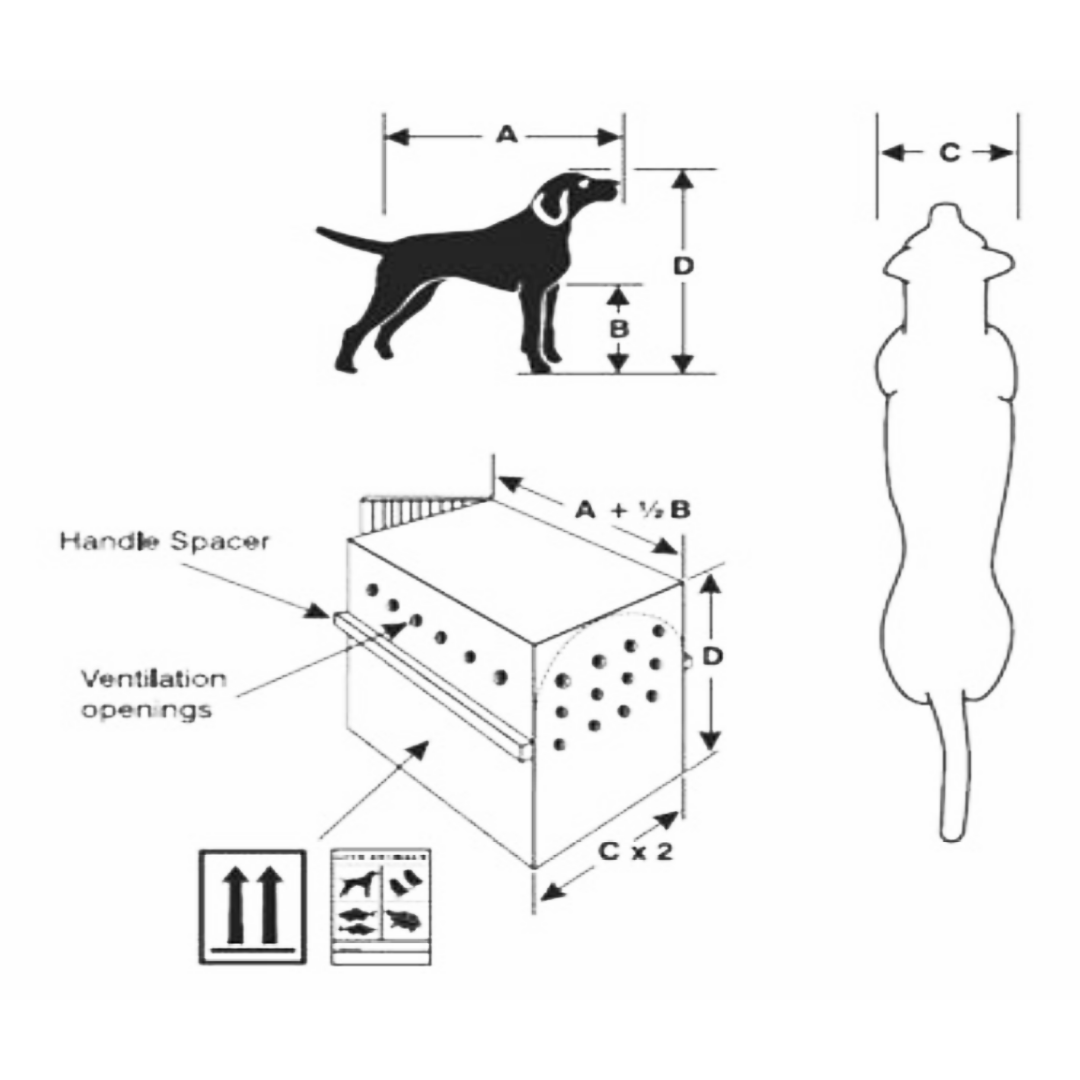
Snub nosed breeds require 10% larger container
An easy way to measure you pet is to gently place your pet against a wall & make a small pencil mark at points A, B & D then measure, rather than trying to get a tape measure up against your pet.
Frequently Asked Questions
Why is it important to measure my pet before air travel?
Measuring your pet correctly helps Airport Pets select the right-sized travel kennel and can prevent unexpected increases in airline freight charges.
How do I measure my pet for an airline travel kennel?
You need to measure your pet’s length, height, width, and standing height. These measurements help determine the appropriate kennel size for safe and comfortable air travel.
What does measurement A mean when measuring a pet?
Measurement A is the length from your pet’s nose to the root of the tail. The tail itself is excluded from this measurement.
How should I measure my pet’s width?
Measurement C is the width of your pet at its widest point. Accurate width measurements are important when selecting the correct airline-approved travel kennel.
Can an incorrect pet measurement increase my transport cost?
Yes. Because airline freight charges are based on kennel size, an inaccurate measurement may result in the need for a larger kennel and potentially higher transport costs.